محاصره هترا (۱۹۷–۱۹۸)
| محاصره هترا | |||||||
|---|---|---|---|---|---|---|---|
| بخشی از جنگهای اشکانیان و رومیان | |||||||
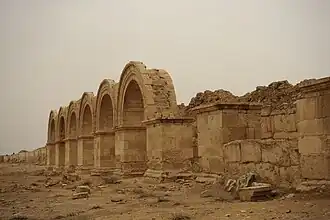 خرابه های هترا | |||||||
| |||||||
| طرفهای درگیر | |||||||
| امپراتوری روم |
امپراتوری اشکانی پادشاهی عربایا | ||||||
محاصره هترا درسال ۱۹۷–۱۹۸ دومین محاصره توسط سپتیمیوس سوروس بود او میخواست هترا را فتح کند بخاطر معبدی که درشهر بود و ثروت زیادی داشت[۳] اما بازم بدون موفقیت بود زیرا بسیاری از سرباز هایش زخمی شده بودند و دستگاه های محاصره اش نابود شده بود برای همین او محاصره را برداشت و به سوریه عقب نشینی کرد[۴]
منابع
- Pirnia, Hasan; Ashtiani, Abbas Iqbal; Babaei, Parviz (2012). History of Persia. Negah Publications. ISBN 978-9643513320.
- Chaumont, M. L.; Schippmann, K. (1988). "Balāš". In Yarshater, Ehsan (ed.). Encyclopædia Iranica, Volume III/6: Baḵtīārī tribe II–Banān. London: Routledge & Kegan Paul. pp. 574–580. ISBN 978-0-71009-118-5.
- Foundation, Encyclopaedia Iranica. "Welcome to Encyclopaedia Iranica". iranicaonline.org.
پانویس
- ↑ "HATRA". Encyclopaedia Iranica (به انگلیسی). Retrieved 2025-04-26.
when the Hatrene king Barsēmías (thus Herodian, History 3.1.3, etc.; probably he is none other than the king ʿbdsmyʾ ʿAbdsēmyā of the inscriptions; see Drijvers, 1977, pp. 823 f.) supported Septimius’s rival Pescennius Niger, and when Septimius laid siege to Hatra twice (in 193 and 197) without achieving anything. His siege engines were burned, and many of his soldiers fell or were wounded by Hatrene archers; the position of the city, its strong walls, and the strength of its warriors eventually forced the emperor to withdraw (Dio Cassius, 76.9.5-10.1, 11.1.-12.5; Herodian, History 3.1.2-3, 5.1, 9.1-9).
- ↑ Advisory Body Evaluation on Hatra. International Council on Monuments and Sites (ICOMOS). 1985. pages 1–2.
- 1 2 Pirnia, Ashtiani & Babaei 2012, p. 170.
- ↑ Chaumont & Schippmann 1988, pp. 574–580.